
 English
 Español
 русский
 عربى
عربى
Home / News / Industry News / How Do You Choose the Right Impeller Type for a submersible wastewater pump to Prevent Clogging in High-Solids Applications?
How Do You Choose the Right Impeller Type for a submersible wastewater pump to Prevent Clogging in High-Solids Applications?
In the complex environment of municipal and industrial drainage, the submersible wastewater pump serves as the heartbeat of the system. However, the presence of various solids—ranging from sand and silt to fibrous textiles and organic waste—presents a significant risk of hydraulic failure. For engineers and B2B procurement professionals, the selection of the impeller is the most critical decision in ensuring system uptime. Jingshui Pump (Shanghai) Co., LTD, a national high-tech enterprise founded in 2011, understands these challenges intimately. Operating from a 36,000-square-meter facility and certified under ISO9001 and ISO14001, we provide intelligent manufacturing solutions that prioritize clog-free operation and energy efficiency.
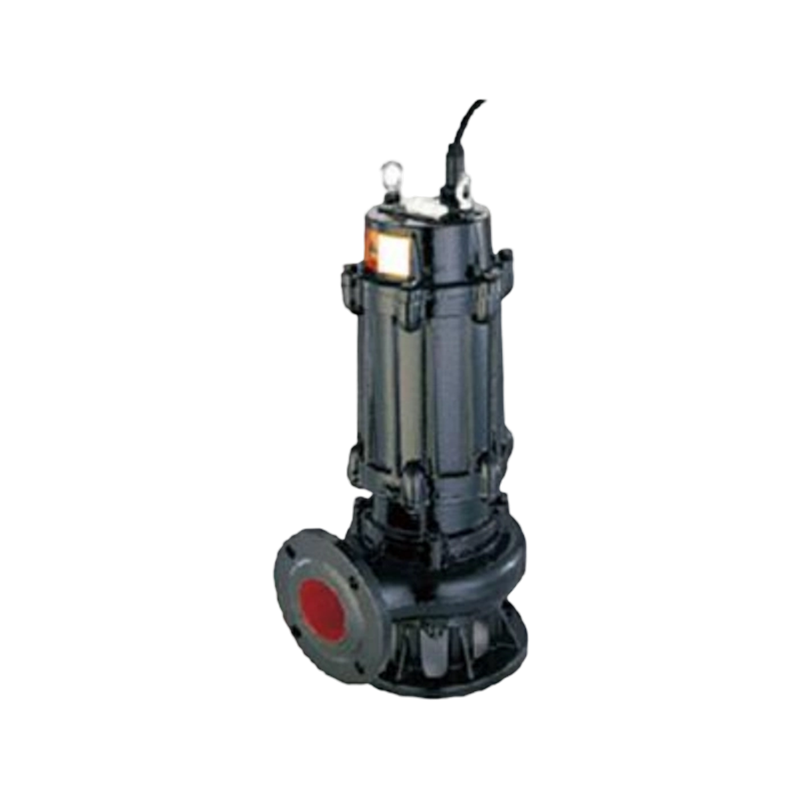
The Critical Role of Impeller Design in Clog Prevention
The hydraulic design of an impeller dictates how solids are transported through the pump casing. In high-solids applications, the goal is to provide a clear passage while maintaining enough head and flow to meet system requirements. Channel impellers are highly efficient for transporting large, spherical solids. However, they may struggle with long, stringy materials that can wrap around the leading edge of the vanes. According to recent data from the Hydraulic Institute (HI), modern wastewater systems are seeing a 15% increase in non-dispersible solids, necessitating more robust heavy duty submersible solids handling pumps with optimized hydraulic profiles.
Comparison: Single-Channel vs. Multi-Channel Impellers
Single-channel impellers provide a larger free passage for a given pump size compared to multi-channel designs, although multi-channel versions offer higher hydraulic efficiency for cleaner fluids.
| Feature | Single-Channel Impeller | Multi-Channel Impeller |
| Solid Handling Capability | Superior; handles large spherical solids easily. | Moderate; prone to bridging between vanes. |
| Hydraulic Efficiency | Moderate (~60-75%). | High (~75-85%). |
| Primary Use Case | Raw sewage and storm water with debris. | Secondary effluent and industrial wash water. |
Vortex Impellers: The Solution for Fibrous and Gaseous Fluids
For applications involving heavy concentrations of rags, wipes, or long fibers, a vortex impeller wastewater pump technical specifications sheet will often reveal the "recessed" design. In this configuration, the impeller is located out of the main flow path, creating a swirling vortex that pulls solids through the pump without direct contact with the blades. This "induced flow" significantly reduces the risk of clogging. Industry benchmarks in 2024 suggest that vortex designs are becoming the standard for small-to-medium lift stations where maintenance access is limited and "ragging" is the primary cause of downtime.
Comparison: Vortex vs. Channel Impellers for Fibrous Content
Vortex impellers are virtually immune to clogging from fibers but consume more energy than channel impellers because they rely on creating a fluid whirlpool rather than direct displacement.
| Application Criteria | Vortex (Recessed) Impeller | Enclosed Channel Impeller |
| Ragging Resistance | Excellent; minimal contact with solids. | Poor; fibers wrap around vane edges. |
| Energy Consumption | Higher due to friction in the vortex. | Lower; direct energy transfer. |
| Abrasive Wear | Lower wear on the impeller itself. | High wear on vane tips and wear rings. |
Tackling Stringy Materials with Macerating Technology
In scenarios where the piping diameter is small, an industrial submersible grinder pump for fibrous solids is required. These pumps feature a cutting mechanism at the suction inlet that shreds solids into fine slurry before they reach the impeller. This technology is vital for pressure sewage systems. Sourcing from reputable non-clog submersible sewage pump manufacturers ensures that the cutting elements are made from hardened stainless steel or high-chrome alloys to withstand the abrasive nature of industrial waste.
Operational Excellence and Reliability
Ensuring the longevity of a submersible wastewater pump involves more than just selecting the right impeller; it requires a robust after-sales and maintenance framework. Following a submersible effluent pump maintenance guide for B2B operators can extend the mean time between failures (MTBF) by as much as 40%. Jingshui Pump (Shanghai) Co., LTD has established a comprehensive quality assurance system, recognized as a Shanghai High-Tech Enterprise, to support our 80-million-yuan investment in water infrastructure technology. Our production base in Shandong ensures that every pump meets ISO14001 environmental and ISO9001 quality standards before deployment.
Conclusion: Maximizing Uptime in Wastewater Infrastructure
Choosing the right impeller is a balancing act between hydraulic efficiency and solid-handling capability. While channel impellers offer energy savings, vortex and grinder technologies provide the reliability needed for the "tough" solids found in modern wastewater. By partnering with professional non-clog submersible sewage pump manufacturers, engineers can specify heavy duty submersible solids handling pumps that are tailored to the specific rheology of their application, ensuring long-term operational success.
Frequently Asked Questions (FAQ)
- Which impeller is best for sand and grit?
- A vortex impeller is generally preferred for abrasive solids because it minimizes direct contact between the particles and the impeller surface, reducing erosive wear.
- Can a channel impeller be used for domestic sewage?
- Yes, provided it has a large enough free passage (typically 80mm or larger) to prevent the "bridging" of solids at the inlet.
- Why does an industrial submersible grinder pump for fibrous solids consume more power?
- The additional power is required to drive the mechanical cutting action at the pump suction to shred tough materials like rags.
- How often should I consult a submersible effluent pump maintenance guide for B2B?
- Monthly visual inspections and quarterly electrical checks are recommended to identify wear on impellers before a catastrophic failure occurs.
- What certifications should I look for in a submersible wastewater pump?
- Look for ISO9001 for quality, ISO14001 for environmental management, and safety certifications such as GB/T28001 or equivalent CE/UL ratings.
Related products
Copyright © JINGSHUI PUMP (SHANGHAI) CO., LTD. All Rights Reserved.
Custom Water Supply/Drainage, Water Treatment, Fire Pump Systems Manufacturers
