
 English
 Español
 русский
 عربى
عربى
Home / News / Industry News / Mastering Total Dynamic Head (TDH) Calculations for High Pressure Submersible Pump Systems
Mastering Total Dynamic Head (TDH) Calculations for High Pressure Submersible Pump Systems
In deep well water extraction and industrial fluid management, the efficiency of a high pressure submersible pump is dictated by the precision of hydraulic engineering calculations. Selecting a pump based solely on the well depth often leads to system underperformance or premature motor failure. To ensure optimal operation, engineers must accurately determine the Total Dynamic Head (TDH). Jingshui Pump (Shanghai) Co., Ltd., a national high-tech enterprise with over 13 years of expertise and a 36,000-square-meter intelligent manufacturing base, specializes in delivering integrated water supply solutions that adhere to ISO9001 and ISO14001 standards. Understanding TDH is the first step in leveraging our advanced pumping technology for sustainable and cost-effective operations.
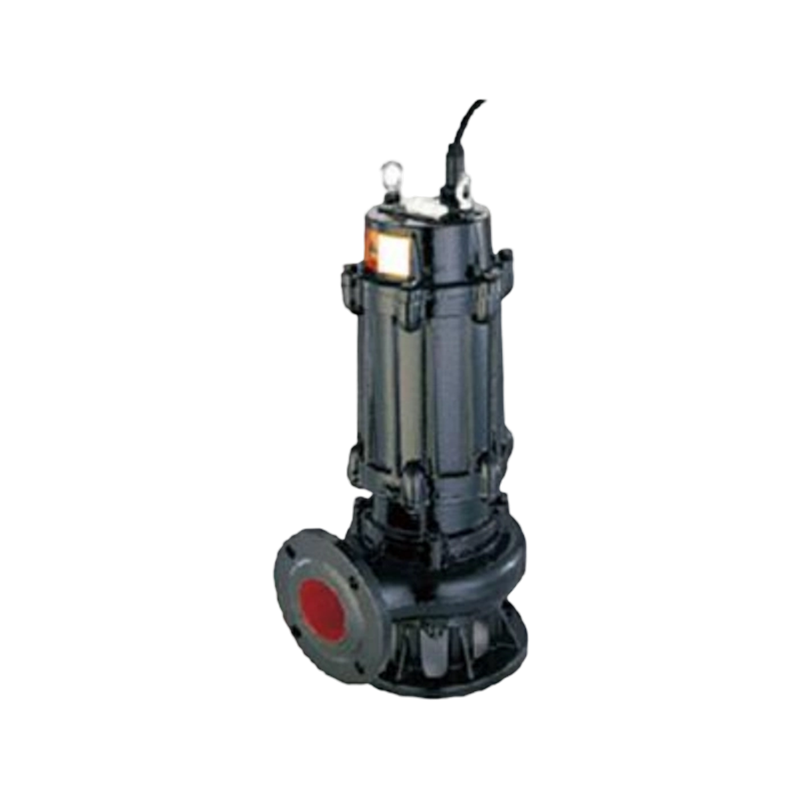
The Engineering Components of Total Dynamic Head
TDH is the total equivalent height that a fluid must be pumped, taking into account friction losses and pressure requirements. For a multi-stage high pressure submersible pump, the TDH is the sum of Static Head, Friction Head Loss, and Operating Pressure Head. According to the 2024 Global Water Technology Outlook by the International Water Association (IWA), the adoption of variable speed drives in deep well systems has increased the necessity for precise TDH modeling to prevent energy wastage, as even a 10% error in head calculation can lead to a 25% increase in power consumption. When selecting an energy efficient high pressure submersible pump, engineers must look beyond the nameplate and calculate the actual system resistance.
Source: International Water Association - 2024 Global Water Technology Report
Comparative Analysis: Static Head vs. Dynamic Head
Static head remains constant regardless of flow, while dynamic head increases exponentially with the velocity of the fluid moving through the discharge piping.
| Component | Physical Basis | Calculation Variables |
| Static Head | Elevation change | Vertical distance from drawdown level to highest discharge point. |
| Friction Head Loss | Fluid resistance | Pipe roughness, diameter, flow rate, and total length of pipe. |
| Pressure Head | End-use requirement | The specific PSI or Bar required at the final outlet or nozzle. |
Calculating Friction Loss in Deep Well Applications
In deep well scenarios, friction loss often constitutes a significant portion of the TDH. For a stainless steel high pressure submersible pump, the internal smoothness of the discharge pipe reduces friction compared to iron pipes. Engineers typically use the Hazen-Williams equation to estimate these losses. According to the 2025 Pump System Optimization Standards by the Hydraulic Institute, high-viscosity fluids or sediment-heavy water in mining applications require a 15% safety margin in friction loss calculations to account for pipe scaling over the system's lifecycle. Utilizing a high pressure submersible pump for deep well irrigation requires careful consideration of the friction caused by long horizontal runs once the water reaches the surface.
Source: Hydraulic Institute - 2025 Pump Selection and Optimization Standards
Comparison: Pipe Material Impact on TDH
The choice of piping material significantly alters the required pump performance, as smoother materials allow for lower friction head losses at higher flow rates.
| Pipe Material | Hazen-Williams C-Factor | Impact on Required Pump Pressure |
| New PVC / Plastic | 150 | Lowest friction; allows for smaller pump stages. |
| New Steel / Stainless | 140 | Standard industrial performance; moderate friction. |
| Aged Cast Iron | 100 | Highest friction; requires higher TDH capabilities. |
Determining Operating Pressure and System Curves
The final component of TDH is the operating pressure required at the discharge point. For a high pressure submersible pump for industrial water supply, this might be the pressure needed for a cooling tower or a boiler feed. For fire protection systems, Jingshui Pump (Shanghai) ensures that the TDH accounts for the pressure drop across valves and backflow preventers. By plotting the system curve against the pump performance curve, we can identify the "Best Efficiency Point" (BEP). Modern wholesale high pressure submersible pump procurement focuses on aligning the BEP with the calculated TDH to maximize the lifespan of the mechanical seals and impellers.
- Static Lift: Measure from the lowest water level during pumping (drawdown) to the highest point of the tank.
- Fitting Losses: Include equivalent lengths for 90-degree elbows, check valves, and gate valves.
- Velocity Head: Generally negligible in most deep well systems but calculated as .
- Safety Factor: Add 5-10% to the total TDH to compensate for motor wear and fluctuating water tables.
Frequently Asked Questions (FAQ)
1. How does drawdown affect the TDH of a high pressure submersible pump?
Drawdown is the distance the water level drops during pumping. You must calculate the static head from the drawdown level, not the standing water level, to ensure the high pressure submersible pump doesn't lose prime or starve under load.
2. Can I use a pump with a higher TDH than my system requires?
While it may seem safer, a pump with excessive head may operate at the far end of its curve, causing vibration, cavitation, and motor overheating. Matching an energy efficient high pressure submersible pump to the specific TDH is always recommended.
3. Does pipe diameter influence the friction head significantly?
Yes. Doubling the pipe diameter can reduce friction loss by more than 75%. For a high pressure submersible pump for deep well irrigation, using larger pipes is often more cost-effective over time than buying a larger pump to overcome friction.
4. Why is stainless steel preferred for high-pressure applications?
A stainless steel high pressure submersible pump offers better corrosion resistance and maintains its internal smooth surface longer than cast iron, preserving the original TDH efficiency of the system for years.
5. How does altitude affect my pump's pressure capability?
At high altitudes, atmospheric pressure is lower, which can affect the Net Positive Suction Head (NPSH). While submersible pumps are pushed by water rather than pulling it, the total pressure delivered at the surface may vary slightly due to air density at the discharge point.
Related products
Copyright © JINGSHUI PUMP (SHANGHAI) CO., LTD. All Rights Reserved.
Custom Water Supply/Drainage, Water Treatment, Fire Pump Systems Manufacturers
