
 English
 Español
 русский
 عربى
عربى
Home / News / Industry News / How to Choose the Right GPM and PSI for an Industrial Water Fighter Pump?
How to Choose the Right GPM and PSI for an Industrial Water Fighter Pump?
In industrial fire protection, the efficacy of an emergency response is defined by two critical hydraulic metrics: Gallons Per Minute (GPM) and Pounds Per Square Inch (PSI). Selecting an inappropriate water fighter pump can lead to catastrophic system failure, either through insufficient flow to suppress a localized fire or inadequate pressure to reach upper-level structures. Jingshui Pump (Shanghai) Co., LTD, a national high-tech enterprise founded in 2011, addresses these complexities through intelligent manufacturing and a 36,000-square-meter production facility. With a robust quality system certified under ISO9001, ISO14001, and OHSAS 18001, we provide comprehensive solutions for fire protection systems, ensuring that every industrial high pressure fire pump for factory safety meets the rigorous demands of modern infrastructure.
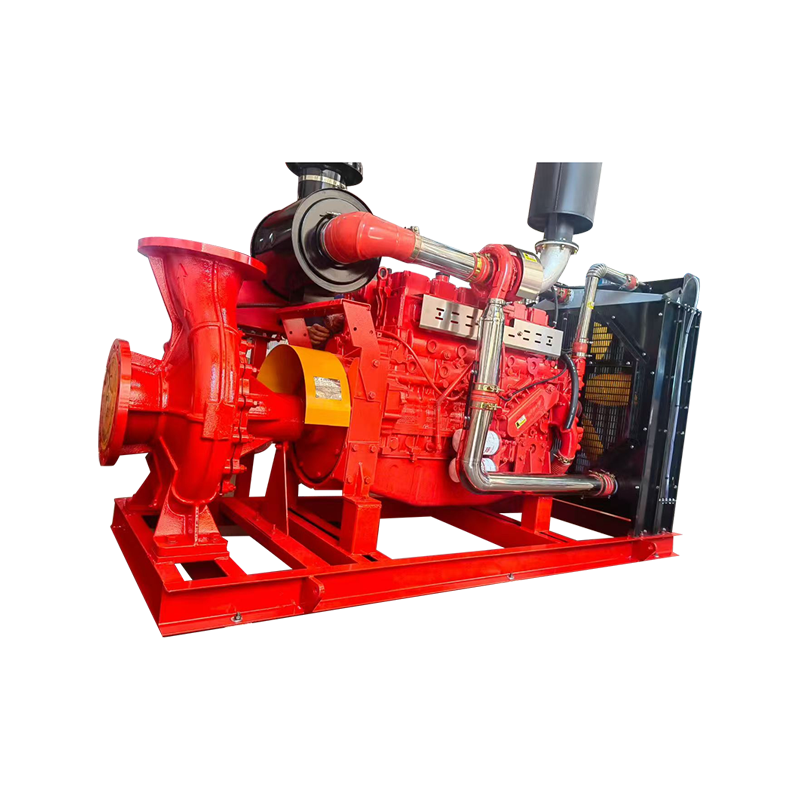
Defining Flow Rate: The Significance of GPM in Fire Suppression
GPM measures the volume of water a pump can move in one minute, which is the primary factor in cooling a fire and preventing its spread. For industrial facilities, GPM requirements are typically calculated based on the fire load of the stored materials and the square footage of the risk area. According to the 2025 Fire Protection Infrastructure Report by the National Fire Protection Association (NFPA), there is an increasing shift toward higher GPM requirements for automated sprinkler systems in warehouses, with a projected 12% increase in recommended flow rates for high-piled storage facilities to counteract modern synthetic material fires. This necessitates the use of a high flow portable water pump for firefighting that can supplement fixed standpipe systems during peak demand.
Source: NFPA - Fire Protection Research Foundation 2025 Industry Trends
GPM Requirements by Facility Type
While a standard residential pump might handle 20-50 GPM, an industrial-grade system requires significantly more volume. A reliable gasoline engine fire pump for remote areas may provide high flow in a compact frame, whereas a large-scale stationary unit handles massive volumes for industrial complexes.
| Application Scale | Typical GPM Range | Primary Objective |
| Small Workshop/Light Hazard | 250 - 500 GPM | Localized containment and small-scale suppression. |
| Industrial Warehouse/Moderate Hazard | 750 - 1,500 GPM | High-volume cooling to prevent structural collapse. |
| Chemical Plants/High Hazard | 2,500+ GPM | Extinguishing high-energy fuel fires and chemical cooling. |
Mastering Pressure: The Role of PSI in Water Projection
If GPM is the volume of the "weapon," PSI is its "range." Pressure is required to overcome friction loss in long hose runs and the vertical lift of tall buildings. An industrial high pressure fire pump for factory safety must maintain adequate nozzle pressure to ensure that the water stream can penetrate the thermal updraft of a fire. Recent technical breakthroughs in 2024, as highlighted by the Hydraulic Institute (HI), have optimized impeller designs to reduce internal turbulence, allowing modern pumps to maintain higher PSI levels with lower energy consumption. This is particularly vital for self priming water pump for emergency fire response units, which must create an immediate vacuum and then sustain high pressure from static water sources like ponds or tanks.
Source: The Hydraulic Institute - 2024 Pump Performance and Efficiency Standards
PSI and Vertical Reach Analysis
Pressure needs are higher for multi-story buildings where gravity works against the pump. A pump with high GPM but low PSI will fail to deliver water to the upper floors of a modern industrial tower.
| System Requirement | Low Pressure Systems | High Pressure Systems |
| Vertical Lift (Head) | < 100 feet | 200 - 500+ feet |
| Hose Length Capacity | Short runs (under 100m) | Long-distance relay (up to 500m+) |
| Nozzle Velocity | Lower penetration into fires | High-velocity stream for deep penetration |
The Synergy of GPM and PSI in System Selection
Choosing the right water fighter pump requires a balance between these two metrics. A common error in B2B procurement is over-specifying GPM while under-specifying PSI, resulting in a system that can move a lot of water but cannot get it to where it is needed. For off-grid locations, a diesel powered fire pump for large scale irrigation and fire protection offers the best torque-to-pressure ratio, capable of sustaining both high volume and high head over extended periods. At Jingshui Pump, we utilize our Shanghai High-Tech Enterprise status to develop intelligent operation platforms that monitor these hydraulic curves in real-time, ensuring that our pumps perform exactly as specified during critical emergencies.
- System Matching: Ensure the pump curve aligns with the friction loss of your specific piping network.
- Power Choice: Diesel engines offer higher torque for sustained PSI, while gasoline is often used for high flow portable water pump for firefighting units due to weight constraints.
- Suction Capability: For non-pressurized sources, a self priming water pump for emergency fire response is mandatory to avoid the need for external priming.
- Certification Compliance: Always verify that the GPM/PSI ratings are certified under standard test conditions (e.g., ISO or UL equivalents).
Frequently Asked Questions (FAQ)
1. How does hose diameter affect my pump's PSI and GPM?
Hose diameter has an inverse relationship with friction loss. A larger hose allows for higher GPM with less pressure drop, while a smaller hose increases PSI loss, requiring an industrial high pressure fire pump for factory safety to compensate.
2. Can a self priming water pump for emergency fire response handle saltwater?
Yes, provided the internal components are made of corrosion-resistant materials like bronze or stainless steel. Standard water fighter pump units may require specific coatings for maritime use.
3. Why is a diesel engine preferred for large-scale fire protection?
A diesel powered fire pump for large scale irrigation and fire protection provides more torque and reliable ignition in high-stress environments, and diesel fuel is generally more stable for long-term storage than gasoline.
4. What is the "rated capacity" of a fire pump?
The rated capacity is the GPM at which the pump can maintain a specific net pressure. Most industrial pumps are designed to provide 150% of their rated flow at 65% of their rated pressure in emergency "over-run" conditions.
5. Is a reliable gasoline engine fire pump for remote areas powerful enough for a factory?
It depends on the factory size. For a small workshop, a reliable gasoline engine fire pump for remote areas is excellent for portability. For large industrial complexes, a permanent diesel installation is usually required to meet GPM codes.
Related products
Copyright © JINGSHUI PUMP (SHANGHAI) CO., LTD. All Rights Reserved.
Custom Water Supply/Drainage, Water Treatment, Fire Pump Systems Manufacturers
