
 English
 Español
 русский
 عربى
عربى
Home / News / Industry News / Long-term Maintenance Benefits of Investing in a High-Efficiency Submersible Wastewater Pump for Municipal Treatment Plants
Long-term Maintenance Benefits of Investing in a High-Efficiency Submersible Wastewater Pump for Municipal Treatment Plants
For municipal engineers and facility managers, the "Total Cost of Ownership" (TCO) of pumping infrastructure is dominated by electricity and long-term maintenance rather than the initial purchase price. A submersible wastewater pump is the heart of any drainage or treatment facility, and upgrading to high-efficiency models can fundamentally shift the operational budget. Jingshui Pump (Shanghai) Co., LTD, a national high-tech enterprise founded in 2011, has dedicated over thirteen years to perfecting intelligent water solutions. From our 36,000-square-meter production facility in Shandong, we manufacture equipment that adheres to ISO9001, ISO14001, and GB/T28001 standards, ensuring that our industrial submersible pump for heavy solids provides the reliability required for continuous municipal service.
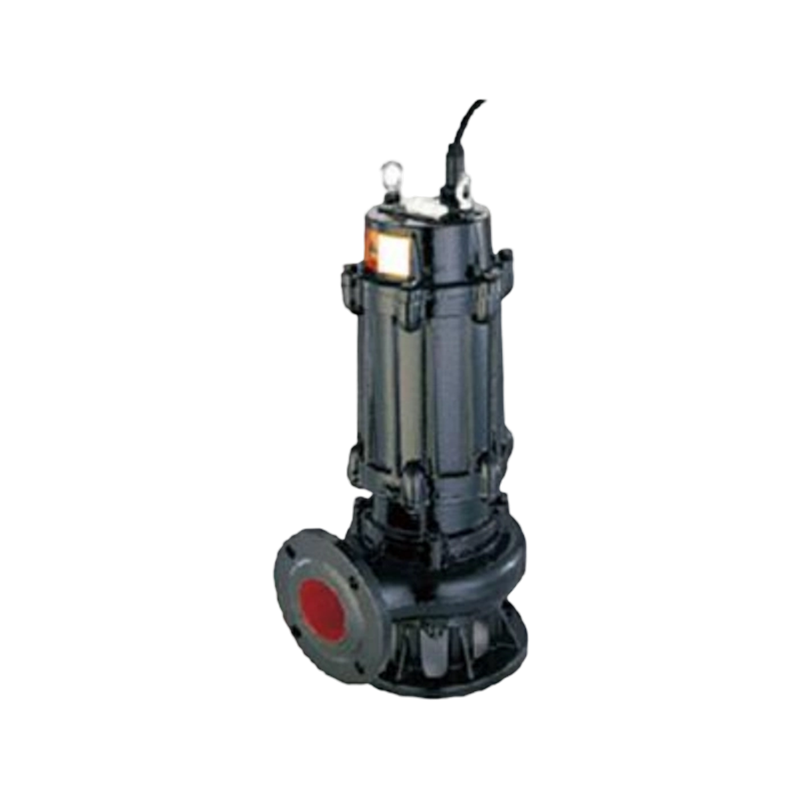
Hydraulic Efficiency and Clog Resistance in Municipal Systems
The primary driver of maintenance costs in wastewater management is "ragging" or clogging. While traditional pumps utilize standard semi-open impellers that are prone to entanglement, a non-clog submersible sewage pump for municipalities employs advanced vortex or single-vane hydraulic designs. These high-efficiency geometries ensure that solids pass through the volute without snagging on the leading edge of the impeller. By reducing the frequency of manual pump de-clogging, plants can significantly lower labor costs and minimize the health and safety risks associated with "pulling a pump" in a hazardous wet well environment.
| Feature | Standard Submersible Pump | High-Efficiency Non-Clog Pump |
| Impeller Geometry | Traditional multi-vane; narrow clearances. | Large free-passage vortex or screw-centrifugal. |
| Clog Susceptibility | High; requires frequent manual cleaning. | Minimal; handles fibrous materials effectively. |
| Operational Downtime | Frequent due to hydraulic blockages. | Significantly reduced; high uptime. |
Thermal Management and Motor Longevity
A heavy duty submersible wastewater pump operating in a municipal plant must withstand continuous thermal stress. High-efficiency pumps often feature IE3 or IE4 class motors, which generate less internal heat due to lower electrical resistance. While standard motors may experience insulation degradation over five to seven years, the superior thermal management in a high flow submersible pump for drainage systems extends the mean time between failures (MTBF) of the motor windings and bearings. Furthermore, the use of advanced mechanical seals in tandem with moisture sensors prevents fluid ingress, which is the leading cause of catastrophic motor failure in older submersible units.
| Component | Standard Efficiency Motor | High-Efficiency IE3/IE4 Motor |
| Heat Dissipation | Higher heat generation; shorter insulation life. | Cooler operation; preserves winding integrity. |
| Seal System | Single mechanical seal; basic monitoring. | Double mechanical seals with oil chamber sensors. |
| Bearing Life | Standard L10 life (approx. 50,000 hrs). | Enhanced L10 life (exceeding 100,000 hrs). |
Vibration Control and Cavitation Prevention
Mechanical vibration is a silent killer of pump shafts and seals. A stainless steel submersible wastewater pump or a high-chrome cast iron unit from Jingshui is precision-balanced to G2.5 standards or higher. High-efficiency designs optimize the Net Positive Suction Head (NPSHr) required, which reduces the risk of cavitation. Compared to lower-tier pumps, where turbulent flow patterns can cause rapid erosion of the volute and impeller, a balanced explosion proof submersible wastewater pump maintains structural integrity even under fluctuating flow conditions common in municipal storm surges.
Structural Durability Comparison
The durability of the casing and the precision of the balance directly impact the frequency of seal replacements and vibration-related crack repairs.
- Precision Balancing: Reduces radial loads on the bearings, extending the maintenance cycle.
- NPSH Optimization: Prevents the "pitting" of metal surfaces caused by vapor bubble implosion.
- Material Selection: Utilizing corrosion-resistant alloys ensures that the casing survives decades in aggressive municipal fluids.
Intelligent Monitoring and Predictive Maintenance
Modern municipal treatment plants are moving toward "Industry 4.0." Jingshui Pump (Shanghai) Co., LTD provides intelligent manufacturing and operation platform development services that integrate directly with your submersible wastewater pump. By monitoring vibration, temperature, and power consumption in real-time, operators can move from reactive maintenance to predictive maintenance. This data-driven approach allows for the scheduling of minor servicing before a major breakdown occurs, preserving the value of the industrial submersible pump for heavy solids over a 20-year lifecycle.
Conclusion: The Strategic Advantage of Quality Engineering
Investing in a high-efficiency submersible wastewater pump is a commitment to long-term fiscal responsibility and environmental stewardship. By reducing energy consumption, labor costs, and spare parts inventory, municipal treatment plants can allocate resources more effectively. Jingshui Pump (Shanghai) Co., LTD stands ready as a Shanghai High-Tech Enterprise to provide the robust quality assurance and comprehensive solutions needed to modernize water infrastructure and create a better environment for all.
Operational Verification: Aligning the Pump to the System Curve
The commissioning of a heavy duty submersible wastewater pump must verify that the "as-built" performance matches the factory-certified test curve. At Jingshui Pump, our 36,000-square-meter facility utilizes precision balancing and high-grade materials, but onsite variables such as pipe friction and static head must be accounted for during the final handover.
1. Pre-Start Mechanical & Electrical Verification
Before energizing the explosion proof submersible wastewater pump, a series of static checks must be performed to protect the motor insulation and mechanical seals from premature failure.
| Checklist Item | Engineering Requirement | Verification Method |
| Insulation Resistance | > 20 MΩ (Phase-to-Phase/Ground). | 500V or 1000V Megger Test. |
| Rotation Direction | Matches directional arrow on volute. | Brief "Jog" test in air or water. |
| Seal Chamber Probe | No moisture detected in oil chamber. | Control panel sensor relay check. |
2. Hydraulic Performance Testing ($Q/H$ Curve)
Once submerged, the high flow submersible pump for drainage systems is tested at three points: Shut-off, Duty Point, and End-of-Curve. This ensures the submersible wastewater pump is not operating too far to the right of the curve, which could lead to cavitation and motor overload.
- Flow Rate ($Q$): Measured via ultrasonic flow meter or calibrated flume.
- Total Dynamic Head ($H$): Calculated by taking the pressure gauge reading ($P_d$) at the discharge and adding the vertical distance to the water level plus friction losses.
- Efficiency Verification: Calculate the hydraulic power output versus electrical power input to verify the industrial submersible pump for heavy solids meets its IE3/IE4 efficiency rating.
3. Vibration and Thermal Baseline Monitoring
Establishing a baseline for vibration and heat is critical for the predictive maintenance platform services provided by Jingshui. Any deviation from these baselines in the future will trigger a maintenance alert.
| Parameter | Acceptable Limit | Instrument |
| Velocity (RMS) | < 4.5 mm/s (for submerged units). | Tri-axial Accelerometer. |
| Bearing Temp Rise | < 40°C above ambient. | Internal PT100/PT1000 sensors. |
| Amperage Draw | ≤ Rated Nameplate Full Load Amps (FLA). | Clamp-on Ammeter / SCADA. |
4. Formal Commissioning Report & Handover
Jingshui Pump (Shanghai) Co., LTD provides comprehensive after-sales support. Upon successful completion of these tests, a formal commissioning report is generated. This document serves as the "birth certificate" for the submersible wastewater pump, providing the data necessary for the intelligent operation platform to track the equipment's health throughout its multi-decade service life.
Frequently Asked Questions (FAQ)
- Q1: How does a non-clog impeller improve maintenance schedules?
A: By allowing solids and fibers to pass without snagging, it reduces the need for manual pump "clearing," which is one of the most labor-intensive maintenance tasks in municipal wastewater management. - Q2: Is an explosion proof submersible wastewater pump necessary for all municipal plants?
A: It is highly recommended for wet wells where methane or other flammable gases may accumulate, ensuring compliance with safety regulations and protecting the facility. - Q3: What is the expected lifespan of a heavy duty submersible wastewater pump?
A: With proper maintenance and a high-efficiency motor, a premium pump from a high-tech manufacturer like Jingshui can operate reliably for 15 to 25 years. - Q4: How does IE3/IE4 motor efficiency affect maintenance?
A: Higher efficiency means less energy is wasted as heat. Lower operating temperatures significantly slow down the aging of motor insulation and bearing grease. - Q5: Can Jingshui Pump provide custom solutions for specific drainage needs?
A: Yes, we provide OEM/ODM and comprehensive water treatment solutions, leveraging our 36,000-square-meter facility and professional design team to meet unique municipal requirements.
Industry References
- Hydraulic Institute (HI) - Standards for Submersible Pump Efficiency and Testing.
- ISO 9906:2012 - Rotodynamic pumps — Hydraulic performance acceptance tests.
- Water Environment Federation (WEF) - Manual of Practice: Wastewater Treatment Plant Design.
- IEEE 841 - Standard for Petroleum and Chemical Industry—Premium-Efficiency, Severe-Duty, Totally Enclosed Fan-Cooled (TEFC) Squirrel Cage Induction Motors.
Related products
Copyright © JINGSHUI PUMP (SHANGHAI) CO., LTD. All Rights Reserved.
Custom Water Supply/Drainage, Water Treatment, Fire Pump Systems Manufacturers
