
 English
 Español
 русский
 عربى
عربى
Home / News / Industry News / Why is a Self-Priming Water Fighter Pump Essential for Rapid Response in Forest Fires?
Why is a Self-Priming Water Fighter Pump Essential for Rapid Response in Forest Fires?
In the high-stakes environment of wildland and forest firefighting, the speed of water deployment is the primary factor in containment success. A self-priming water fighter pump represents a critical technological advancement in emergency hydraulics, offering the ability to draw water from natural sources without the manual air-bleeding required by traditional systems. Jingshui Pump (Shanghai) Co., LTD, founded in 2011 and recognized as a national high-tech enterprise, has spent over thirteen years perfecting intelligent manufacturing solutions for fire protection. Operating from a 36,000-square-meter facility and certified under ISO9001 and ISO14001, Jingshui specializes in high-performance pump systems that ensure reliability when every second counts in a disaster zone.
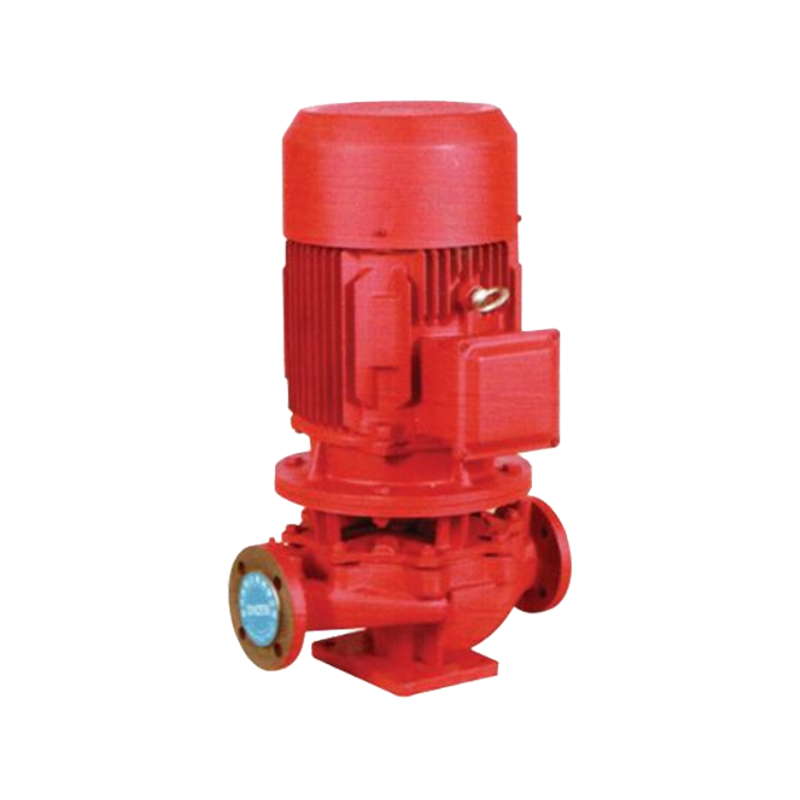
1. Hydraulic Efficiency: The Self-Priming Advantage in Raw Terrain
Wildland firefighting often requires drafting water from irregular sources such as ponds, streams, or mobile tanks. Engineers often ask: how does a self-priming fire pump work in forest areas? Traditional centrifugal pumps require the suction line and pump casing to be completely filled with water to function. Conversely, a self-priming water fighter pump utilizes a specialized casing design that mixes air with water to create a fluid that can be pumped, effectively evacuating air from the suction line. This capability eliminates the need for external priming devices, significantly reducing the "setup-to-flow" time during a rapid response.
While a standard centrifugal pump may fail if an air pocket enters the line, a self-priming unit can re-prime itself automatically, ensuring continuous operation even when the water source level fluctuates.
| Technical Feature | Self-Priming Water Fighter Pump | Standard Centrifugal Fire Pump |
| Initial Setup | Automatic air evacuation | Manual priming required |
| Suction Lift Reliability | High (Handles air pockets) | Low (Loses prime with air) |
| Operational Downtime | Minimal (Auto-recovery) | Significant (Requires restart) |
2. Suction Capability: Analyzing Max Suction Lift and NPSH
In rugged forest topography, the pump is often positioned significantly higher than the water source. A frequent technical concern is the max suction lift of portable fire pumps. A high-quality self-priming water fighter pump is engineered to achieve a vertical suction lift of up to 7-9 meters. To maintain this performance, Jingshui Pump (Shanghai) focuses on optimizing the Net Positive Suction Head (NPSH) requirements. By reducing internal turbulence through precision-engineered impellers, our pumps prevent cavitation—a common cause of mechanical failure when drafting from deep sources.
Compared to lower-tier pumps that suffer from cavitation at lifts over 5 meters, the advanced hydraulic design of a Jingshui self-priming water fighter pump allows for stable flow rates at higher elevations, which is vital for mountainous forest firefighting.
| Drafting Variable | Jingshui Engineering Standard | General Utility Pumps |
| Effective Suction Lift | Up to 9 Meters | Typically < 6 Meters |
| Cavitation Resistance | Superior (Optimized NPSH) | Moderate to Low |
| Inlet Diameter Stability | High-grade alloy reinforcement | Standard polymers |
3. Portability and Rapid Deployment for Wildland Response
Forest fires move quickly, requiring firefighters to relocate equipment frequently. Therefore, the portable fire pump for wildland firefighting must be both lightweight and robust. Jingshui Pump (Shanghai) utilizes high-strength, lightweight alloys in the construction of our self-priming water fighter pump units. This portability ensures that teams can carry the pump into remote areas where vehicle access is impossible. Furthermore, when analyzing a self priming fire pump vs centrifugal pump for field use, the self-priming unit's simplified operational sequence allows for successful deployment by personnel under high-stress conditions with minimal training.
- Weight Efficiency: Integrated frames and compact casings reduce the physical burden on fire crews.
- Durability: Materials selected specifically for high pressure fire pump for forest fire applications withstand debris and sediment found in natural water sources.
- Operation: One-button start and automatic priming allow the operator to focus on nozzle management rather than pump maintenance.
4. System Integration: Fire Protection and Intelligent Operation
As a national high-tech enterprise, Jingshui Pump (Shanghai) Co., LTD does not just manufacture hardware; we develop intelligent operation platforms. Modern firefighting requires data. One might ask: how to maintain a fire pump for emergency response? Our self-priming water fighter pump can be integrated with sensors that monitor pressure, flow, and engine health in real-time. This ensures that the pump is always in peak condition, adhering to our ISO9001:2008 Quality Management and GB/T28001 Occupational Health and Safety standards. By providing comprehensive solutions for fire protection, we ensure that our pumps are not just tools, but reliable partners in disaster mitigation.
Frequently Asked Questions (FAQ)
1. Do I need to add water to a self-priming pump before the first use?
Yes. Although it is a self-priming water fighter pump, the pump casing must be filled with water once during the initial setup. After that, the pump retains enough liquid to automatically evacuate air from the suction line in future operations.
2. Can these pumps handle sandy or muddy water from forest streams?
While designed for high-pressure water delivery, Jingshui's high pressure fire pump for forest fire units feature wear-resistant impellers. However, we recommend using a strainer on the suction hose to prevent large debris from entering the casing.
3. What is the maximum discharge pressure for a forest fire pump?
A typical self-priming water fighter pump for forest use can achieve pressures between 0.6 MPa and 1.2 MPa, depending on the model, allowing for long-distance hose lays up steep slopes.
4. How does Jingshui ensure the quality of its fire pumps?
We maintain a robust quality assurance system and have been recognized as a Shanghai High-Tech Enterprise. Every self-priming water fighter pump undergoes rigorous testing in our 36,000-square-meter facility before delivery.
5. Are these pumps compatible with firefighting foam?
Yes. Our pumps are compatible with most standard foam inductors, allowing for the deployment of Class A foam, which is highly effective for portable fire pump for wildland firefighting operations.
Industry References
- NFPA 1906: Standard for Wildland Fire Apparatus.
- ISO 9001:2008: Quality Management Systems — Requirements.
- Hydraulic Institute Standards: Sealing and Priming for Centrifugal Pumps.
- Technical Archive: Jingshui Pump (Shanghai) Co., LTD (2026 Edition).
Related products
Copyright © JINGSHUI PUMP (SHANGHAI) CO., LTD. All Rights Reserved.
Custom Water Supply/Drainage, Water Treatment, Fire Pump Systems Manufacturers
