
 English
 Español
 русский
 عربى
عربى
Home / News / Industry News / Is a VFD-Compatible High Pressure Submersible Pump the Best Investment for Energy-Efficient Industrial Water Supply?
Is a VFD-Compatible High Pressure Submersible Pump the Best Investment for Energy-Efficient Industrial Water Supply?
In the modern industrial landscape, water infrastructure accounts for a significant portion of operational expenditure. For engineers and facility managers, the quest for a sustainable industrial water supply system often leads to a critical technical crossroad: whether to utilize traditional fixed-speed equipment or invest in advanced VFD-compatible high pressure submersible pumps. Jingshui Pump (Shanghai) Co., LTD, a national high-tech enterprise with over 13 years of expertise and an 80 million yuan registered capital, has been at the forefront of this evolution. From our 36,000-square-meter production facility, we deliver high-precision high pressure submersible pump solutions backed by ISO9001 and ISO14001 certifications. This article analyzes the thermodynamic and economic advantages of integrating Variable Frequency Drives (VFDs) with high pressure submersible pumps to maximize ROI in complex water treatment and drainage scenarios.
1. The Physics of Efficiency: VFD vs. Fixed Speed Control
The core advantage of a VFD-compatible high pressure submersible pump lies in its ability to adhere to the Affinity Laws of fluid mechanics. Traditional pumps operate at a constant RPM, necessitating the use of restrictive valves to manage flow, which wastes energy as heat and vibration. In contrast, how a VFD improves submersible pump performance is by adjusting the motor speed to match the actual demand of the system. This precision is essential for high pressure submersible pumps for deep wells, where static head and friction losses vary. When comparing VFD vs. soft starter for submersible pumps, the soft starter only manages the initial surge, whereas the VFD provides continuous modulation. Integrating intelligent pump control for industrial water supply allows the system to operate at the "Best Efficiency Point" (BEP) regardless of fluctuating load conditions.
Operational Efficiency Comparison
- Fixed Speed Systems: Rely on throttling, leading to high mechanical stress and energy dissipation across valves.
- VFD Systems: Adjust electrical frequency to change motor speed, drastically reducing energy consumption during low-demand periods.
| Operational Parameter | Fixed Speed Pump | VFD-Compatible High Pressure Submersible Pump |
| Energy Consumption | High (Constant 100% Power) | Variable (Proportional to Demand) |
| Mechanical Wear | High (Frequent Start/Stop Cycles) | Low (Controlled Acceleration/Deceleration) |
| Pressure Stability | Fluctuating (Valve Dependent) | Stable (Real-time Feedback Loop) |
| System Lifespan | Standard | Extended (Reduced Thermal Stress) |
2. Engineering Durability: Addressing High-Head Challenges
For applications such as high pressure submersible pumps for mining or high-rise construction, the mechanical load on the impeller and shaft is immense. A VFD-compatible high pressure submersible pump mitigates these stresses through "soft ramping." By avoiding the "water hammer" effect commonly seen in manual operations, these pumps protect the integrity of the industrial water supply system piping. At Jingshui Pump (Shanghai) Co., LTD, we emphasize a robust quality assurance system to ensure our heavy duty high pressure submersible pumps can withstand these hydraulic shocks. Furthermore, understanding how to choose a high pressure submersible pump involves evaluating the motor insulation class; VFD operation introduces harmonic distortions, requiring high-grade insulation (Class F or H) to prevent premature motor failure. The benefits of VFD in high pressure water systems extend beyond energy to encompass complete mechanical protection.
Technical Protection Sequence
- Soft Start/Stop: Eliminates hydraulic surges and protects pipe joints and valves.
- Overload Protection: Real-time monitoring of current prevents motor burnout during dry-run conditions.
- Harmonic Filtering: Advanced VFDs reduce electrical noise, ensuring the longevity of the high pressure submersible pump motor.
- PID Control: Maintains constant pressure automatically by adjusting to sensor feedback.
| Failure Risk | Traditional Pump Mitigation | VFD-Compatible Pump Mitigation |
| Water Hammer | Check Valves/Surge Tanks | Controlled Deceleration (Built-in) |
| Motor Overheating | Thermal Relays | Real-time Frequency Scaling |
| Pipe Bursting | Pressure Relief Valves | Precision Pressure Setpoints |
3. ROI Analysis: Energy Savings and Maintenance Reduction
While the initial capital expenditure for a VFD-compatible high pressure submersible pump is higher than a standard unit, the high pressure submersible pump energy saving data proves a rapid payback period, often within 12 to 24 months. By reducing the motor speed by just 20%, power consumption can be reduced by nearly 50% due to the cubic relationship between speed and power. Additionally, maintenance tips for industrial submersible pumps under VFD control are less frequent because the system operates with significantly less vibration. Jingshui Pump provides comprehensive high pressure submersible pump maintenance services and intelligent operation platforms that allow for remote monitoring. This digital integration ensures that the best high pressure submersible pump for industrial use remains a high-performing asset throughout its lifecycle, minimizing downtime in critical fire protection or water treatment roles.
Conclusion: The Strategic Choice for Future-Proofing
Ultimately, investing in a VFD-compatible high pressure submersible pump is not merely an equipment upgrade; it is a strategic move toward intelligent manufacturing and operational excellence. By combining Jingshui Pump's thirteen years of engineering rigor with VFD technology, industries can achieve unprecedented levels of high pressure submersible pump energy saving. Whether for mining, drainage, or municipal water supply, the synergy of high-head capability and variable speed control offers the most robust and cost-effective solution for modern water management.
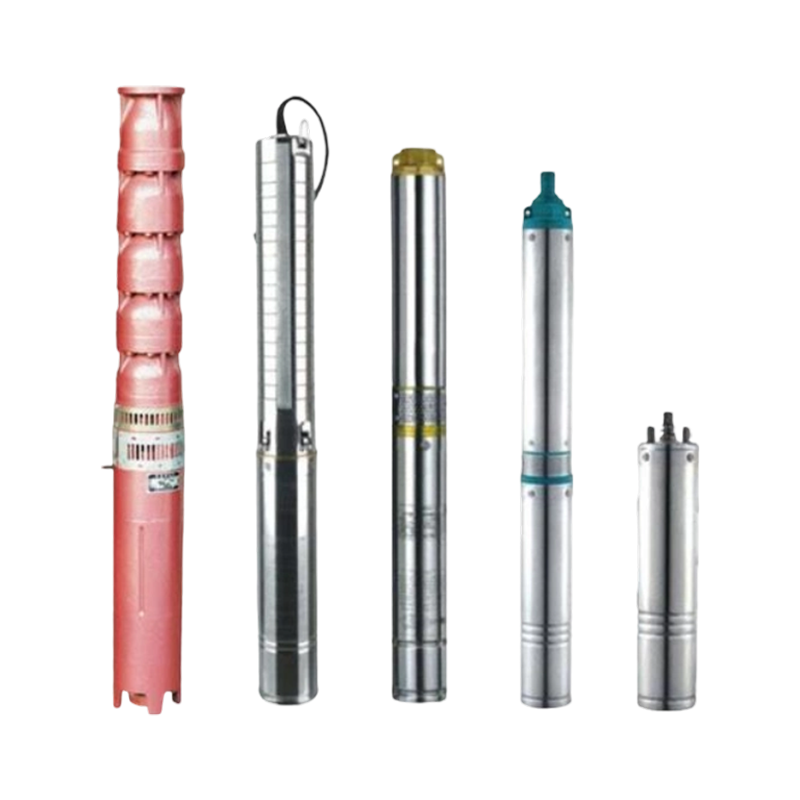
Frequently Asked Questions (FAQ)
1. Can any high pressure submersible pump be used with a VFD?
No. The motor must be "inverter-duty" rated with high-grade insulation to handle the voltage spikes and heat generated by the VFD's high-frequency switching.
2. What is the average energy saving when switching to a VFD submersible pump efficiency model?
Depending on the load profile, most industrial systems see an energy reduction of 25% to 50% compared to traditional throttling methods.
3. How do I know how to choose a high pressure submersible pump for a deep well?
You must calculate the Total Dynamic Head (TDH), which includes the vertical lift, friction loss in pipes, and the required discharge pressure at the surface.
4. Does a VFD protect high pressure submersible pumps for mining from dry running?
Yes, most modern VFDs can detect a drop in motor load (underload), which indicates the pump has lost prime or the water level has dropped, automatically shutting down to prevent damage.
5. Is the maintenance for a heavy duty high pressure submersible pump more complex with a VFD?
Actually, maintenance is often simpler. While the VFD itself requires a clean environment, the pump experiences less mechanical wear, resulting in longer intervals between seal and bearing replacements.
Industry References
- ISO 9906: Rotodynamic pumps — Hydraulic performance acceptance tests.
- HI 9.6.4: Hydraulic Institute Standard for Rotodynamic Pumps for Vibration Measurement.
- IEC 60034-18-41: Qualification and type tests for Type I electrical insulation systems used in rotating electrical machines fed from voltage converters.
- Jingshui Pump (Shanghai) Technical Report: "Energy Efficiency Optimization in Variable Load Submersible Systems" (2024).
Related products
Copyright © JINGSHUI PUMP (SHANGHAI) CO., LTD. All Rights Reserved.
Custom Water Supply/Drainage, Water Treatment, Fire Pump Systems Manufacturers
