
 English
 Español
 русский
 عربى
عربى
Home / News / Industry News / Common Failures and Maintenance Strategies for Centrifugal Pumps in Wastewater Treatment Processes
Common Failures and Maintenance Strategies for Centrifugal Pumps in Wastewater Treatment Processes
Introduction: The "Heart" of the Wastewater Treatment System
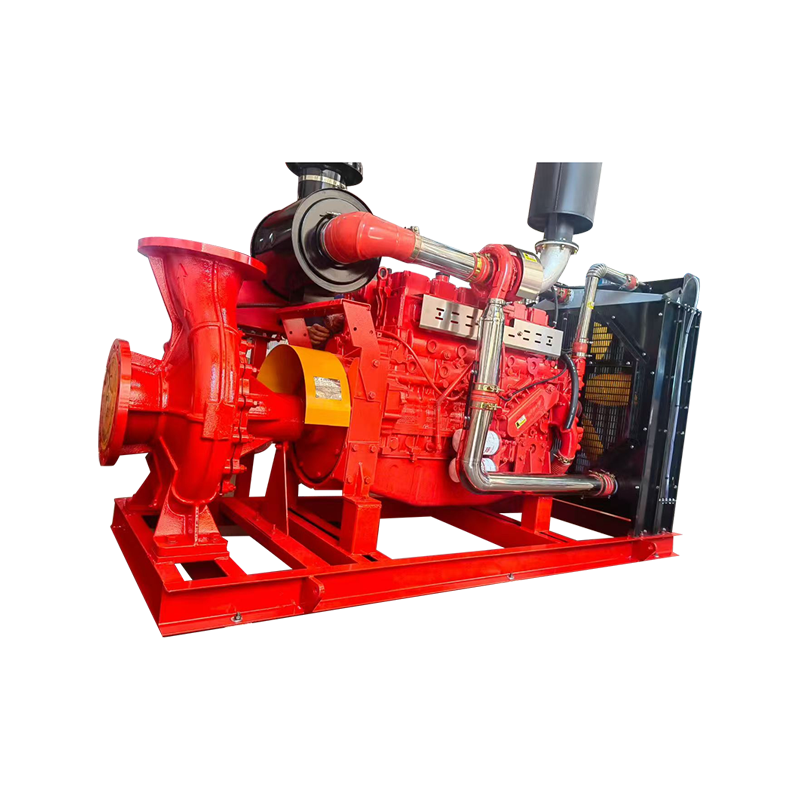
In municipal sewage plants, industrial wastewater treatment stations, and water reuse systems, centrifugal pumps for wastewater treatment serve as the core equipment for fluid conveyance, lifting, circulation, and chemical dosing, playing a vital role. Their simple structure, stable flow rate, and ease of maintenance make them the industry's preferred choice. However, the complexity of wastewater media—containing solid particles, fibers, corrosive chemicals, and variable viscosity—subjects pumps to harsh operating conditions for extended periods. Without timely diagnosis and proactive maintenance, failures can lead to efficiency degradation, costly downtime, and even environmental compliance risks. This article systematically reviews the typical failure modes and effective maintenance strategies for centrifugal pumps used in wastewater treatment.
I. Typical Failure Modes and Root Cause Analysis
1. Corrosion and Abrasion
- Symptoms: Pitting, perforation, or wall thinning on the pump casing and impeller, leading to gradual performance decline.
- Root Causes:
- Exposure to aggressive media such as acids, alkalis, and salts (e.g., electroplating wastewater with extreme pH values).
- Long-term erosion caused by suspended solids (sand, slag).
- Localized impact corrosion induced by cavitation.
2. Clogging and Wrapping
- Symptoms: Sudden drop in flow rate, increased motor current, intensified vibration, and even overload tripping.
- Root Causes:
- Entanglement of fibrous materials (rags, hair, plastic) around the impeller.
- Large solids jamming the inlet or volute channel.
- Accumulation of sediment inside the pump due to intermittent operation.
3. Cavitation and Vibration
- Symptoms: Crackling or popping noises inside the pump, severe vibration, and a sharp drop in head and efficiency.
- Root Causes:
- Excessive installation height or high suction line resistance, resulting in insufficient Net Positive Suction Head Available (NPSHa).
- Increased medium temperature, raising the vapor pressure.
- Air leakage in the suction line.
4. Mechanical Seal Leakage
- Symptoms: Visible dripping at the shaft seal, potentially causing environmental contamination.
- Root Causes:
- Worn or thermally cracked seal faces (caused by dry running or particle ingress).
- Aged seal O-rings or material incompatibility with the medium.
- Excessive axial shaft movement, disrupting seal positioning.
5. Bearing Overheating and Failure
- Symptoms: Abnormally high temperature at the bearing housing, increased noise, and in severe cases, rotor seizure.
- Root Causes:
- Improper lubrication (wrong grease type, incorrect quantity, contaminated or degraded grease).
- Excessive misalignment between pump and motor shafts.
- Prolonged overload operation or rotor imbalance.
II. Preventive Maintenance Strategies – From Reactive Repair to Proactive Management
1. Reliability Optimization During the Design Phase
- Material Selection: Choose corrosion-resistant and wear-resistant materials based on detailed media analysis. For media containing chlorides or acids/alkalis, 304/316L stainless steel or duplex stainless steel is recommended. For high-wear applications, consider high-chromium cast iron or ceramic-coated impellers.
- Hydraulic Design: Select non-clogging impeller types (single/dual vane, vortex, or grinder impellers) to ensure the passage of solids and fibers.
- NPSH Verification: Ensure the pump's Required Net Positive Suction Head (NPSHr) is lower than the system's NPSHa, allowing a safety margin for fluctuations in liquid level and temperature.
2. Operational Monitoring and Inspection
- Vibration and Temperature Tracking: Regularly monitor bearing housing vibration velocity (mm/s) and temperature (°C). Establish baseline data and investigate anomalies promptly.
- Performance Curve Comparison: Periodically record flow rate, head, and power consumption. Compare with the factory curve to assess impeller wear or pipeline blockage severity.
- Seal Integrity Check: Visually inspect mechanical seals for leakage daily. For double mechanical seals, ensure the barrier fluid pressure is higher than the medium pressure.
3. Scheduled Maintenance Program
- Lubrication Management: Replace bearing grease at set intervals (e.g., every 2000 operating hours). Use water-resistant, extreme-pressure greases like lithium-based or complex calcium-based greases.
- Predictive Replacement of Wear Parts: Proactively replace mechanical seals, O-rings, bearings, etc., based on operating hours (e.g., every 8000 hours) or annual schedules to avoid unplanned downtime.
- Cleaning and Descaling: Periodically disassemble the pump to remove scale, sludge, and entangled debris from the impeller and volute, especially when handling viscous or crystallizing media.
4. Redundancy and Control Strategies
- Duty/Standby Configuration: Install dual pumps at critical stations for alternating operation, preventing prolonged continuous duty of a single pump.
- VFD Application: Utilize Variable Frequency Drives (VFDs) to adjust pump speed based on actual demand (level or flow), reducing start/stop shocks and energy consumption.
III. Case Study: Solving Cavitation in a Municipal Sewage Lift Station
- Problem: Three centrifugal pumps experienced frequent cavitation, requiring impeller replacement twice within six months.
- Diagnosis: On-site measurement revealed excessive local resistance in the suction piping and insufficient submergence due to low level control settings.
- Corrective Actions:
- Adjusted control logic to increase the minimum operating liquid level.
- Replaced the inlet elbow with a long-radius elbow.
- Upgraded impeller material to 2507 duplex stainless steel for enhanced cavitation and corrosion resistance.
- Result: The pumps operated continuously for 18 months post-modification without cavitation, reducing maintenance costs by 70%.
IV. Professional Support: From Product to System Solution
Facing the complexity and diversity of wastewater treatment conditions, partnering with an experienced original manufacturer is crucial. Our series of centrifugal pumps for wastewater treatment offers customized configurations tailored to different wastewater characteristics:
- Material Options: Cast iron, 304/316L stainless steel, duplex stainless steel, high-chromium cast iron.
- Sealing Solutions: Single/double mechanical seals with optional API flush plans.
- Impeller Types: Closed, open, vortex, grinder – matching various solid and fiber handling needs.
- Certification Assurance: Products hold CE, ISO 9001, and other certifications, meeting global market access requirements.
We provide not only standard products but also services including pump sizing calculations, NPSH analysis, failure diagnosis, and on-site operation & maintenance training. Through scientific selection and proactive maintenance, we help wastewater treatment facilities significantly reduce pump failure rates and ensure continuous, stable system operation.
Related products
Copyright © JINGSHUI PUMP (SHANGHAI) CO., LTD. All Rights Reserved.
Custom Water Supply/Drainage, Water Treatment, Fire Pump Systems Manufacturers
